
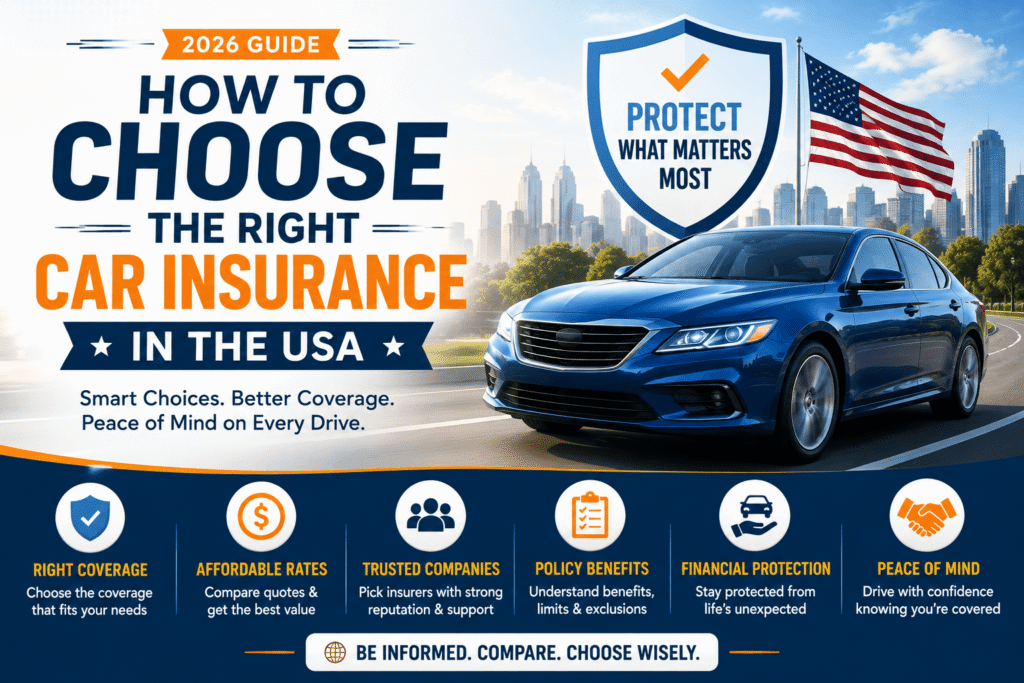
How to Choose the Right Car Insurance in the USA
Choosing car insurance in the United States can feel overwhelming. With so many companies, coverage options, and pricing differences, it’s easy to wonder which policy is actually right for you. While cost is important, the cheapest policy isn’t always the best choice. The right car insurance should protect you financially, fit your budget, and provide reliable support when you need to file a claim.
This guide explains everything you need to know about choosing the right car insurance in the USA, helping you make a confident decision without paying for coverage you don’t need.
Why Choosing the Right Car Insurance Matters
Car insurance is more than just a legal requirement in most states. It’s financial protection that can save you thousands of dollars after an accident, vehicle theft, or unexpected damage.
A good insurance policy helps cover repair costs, medical expenses, legal liability, and even replacement transportation in certain situations. Without adequate coverage, a single accident could result in significant out-of-pocket expenses.
That’s why selecting the right policy is just as important as finding an affordable premium.
Understand the Different Types of Coverage
Before comparing insurance companies, it’s essential to understand the basic types of coverage available.
Liability Insurance
Liability insurance is required in almost every state. It pays for injuries and property damage you cause to other people if you’re responsible for an accident. However, it doesn’t pay for repairs to your own vehicle.
Collision Coverage
Collision coverage pays to repair or replace your vehicle after an accident, regardless of who caused it. If you drive a newer or financed vehicle, this coverage is often recommended.
Comprehensive Coverage
Comprehensive insurance protects your car from events that aren’t related to collisions, such as theft, vandalism, fire, floods, hail, falling objects, or damage caused by animals.
Uninsured and Underinsured Motorist Coverage
Unfortunately, not every driver carries enough insurance. This coverage protects you if you’re involved in an accident with someone who has little or no insurance.
Personal Injury Protection (PIP)
Some states require Personal Injury Protection, also known as PIP. It helps pay medical bills, rehabilitation costs, and lost wages for you and your passengers after an accident, regardless of who was at fault.
Determine How Much Coverage You Really Need
The right amount of coverage depends on your personal situation.
If you own an older vehicle with a low market value, minimum liability coverage may be sufficient. However, if you drive a newer car, have a loan, or rely on your vehicle every day, full coverage often provides much better financial protection.
Think about how much you could comfortably pay out of pocket if your car were damaged or totaled. Your answer will help determine the level of coverage you should purchase.
Compare Multiple Insurance Companies
One of the biggest mistakes drivers make is buying the first insurance policy they find. Every insurance company calculates premiums differently, which means two companies can offer dramatically different prices for the exact same coverage.
Getting quotes from at least three to five insurers allows you to compare premiums, coverage options, customer reviews, claims satisfaction, and available discounts. Spending a little extra time comparing quotes could save you hundreds of dollars every year.
Don’t Focus Only on Price
It’s tempting to choose the lowest premium, but the cheapest policy isn’t always the best value.
Instead, consider factors such as claim settlement speed, customer support, financial stability, roadside assistance, rental car reimbursement, and policy flexibility.
Paying slightly more for better service can make a significant difference if you ever need to file a claim.
Choose a Deductible That Fits Your Budget
A deductible is the amount you pay before your insurance company covers the remaining repair costs.
A higher deductible usually means lower monthly premiums, while a lower deductible results in higher monthly payments but smaller out-of-pocket expenses after an accident.
Choose a deductible you could comfortably afford in an emergency.
Look for Available Discounts
Most insurance companies offer a wide range of discounts, but many drivers never ask about them.
Depending on your situation, you may qualify for discounts if you:
- Have a clean driving record
- Bundle your home and auto insurance
- Insure multiple vehicles
- Are a good student
- Complete a defensive driving course
- Drive fewer miles each year
- Pay your premium in full
- Enroll in paperless billing
- Use a safe-driving mobile app
These discounts can reduce your premium considerably over time.
Read the Policy Before Buying
Many people purchase insurance without reading the policy details. Before signing up, take time to understand exactly what’s covered and what isn’t.
Review the coverage limits, exclusions, deductibles, optional add-ons, claim procedures, and policy renewal terms. Knowing these details beforehand can prevent costly surprises later.
Consider the Insurance Company’s Reputation
An insurance policy is only as good as the company behind it. Look for insurers with strong customer satisfaction ratings, positive claims experiences, and excellent financial stability.
Reading customer reviews and checking independent ratings can provide valuable insight into how an insurer treats policyholders during the claims process.
Review Your Policy Every Year
Your insurance needs can change over time. Buying a new vehicle, moving to a different state, getting married, or improving your driving record may all affect your premium.
Reviewing your policy annually and comparing quotes from other providers ensures you’re still receiving the best value for your money.
Common Mistakes to Avoid
Many drivers unknowingly pay more than necessary or choose inadequate protection.
Common mistakes include:
- Purchasing insurance based only on price
- Choosing the minimum required coverage for an expensive vehicle
- Forgetting to compare quotes
- Ignoring available discounts
- Selecting an unrealistic deductible
- Allowing coverage to lapse
- Never reviewing the policy after renewal
Avoiding these mistakes can help you save money while ensuring you remain properly protected.
Simple Tips to Save Money on Car Insurance
Saving money doesn’t always require reducing your coverage. You can lower your premium by maintaining a clean driving record, increasing your deductible, bundling multiple insurance policies, driving fewer miles, improving your credit score where applicable, and shopping around before each renewal.
Even small changes can lead to significant savings over the life of your policy.
Frequently Asked Questions
How do I choose the best car insurance company?
The best company offers a combination of affordable pricing, reliable customer service, strong financial ratings, fast claims processing, and the coverage options you need.
Is full coverage always necessary?
Not necessarily. Full coverage is usually recommended for newer or financed vehicles, while older cars with lower values may only require liability insurance.
How often should I compare insurance quotes?
Comparing quotes once a year or before your policy renews is a smart way to ensure you’re getting the best available rate.
Can switching insurance companies really save money?
Yes. Many drivers reduce their premiums by comparing multiple providers and switching to a company offering better rates for the same level of coverage.
Final Thoughts
Choosing the right car insurance in the USA isn’t simply about finding the lowest premium—it’s about protecting yourself, your passengers, and your financial future. By understanding the different types of coverage, comparing multiple insurers, taking advantage of available discounts, and reviewing your policy regularly, you can find a plan that offers both value and peace of mind.
Take your time, ask questions, and compare your options carefully. A little research today can help you avoid unnecessary expenses and ensure you’re properly protected every time you get behind the wheel.